跳至主要內容 / Skip to content
21 — 2019

十三行博物館|常設展視覺與考古工作站圖案設計Shihsanhang Museum — Permanent Exhibition Graphics & Archaeological Workstation

3 views
Year / 年份
2019
Category / 類別
Permanent Exhibition · Exhibition Graphics
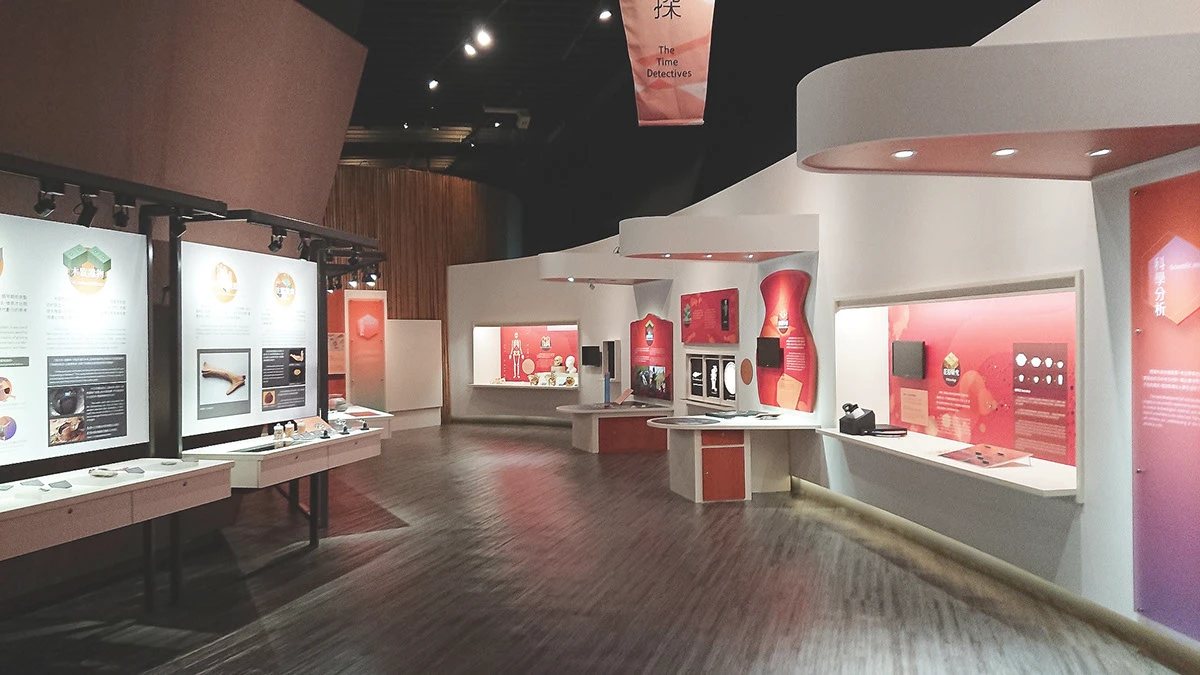
十三行博物館常設展考古工作站的展場實景,展示橘紅色圖文展板與互動桌面
Summary / 專案摘要

十三行博物館常設展的視覺與圖案設計,涵蓋展區識別、十三行遺址年表,以及「考古工作站」的材料分類與研究方法圖解。設計以不同色彩區分主題,把出土遺物、陶器製作、保存維護與科學分析轉化為圖標、插畫、照片和雙語展板。頁面同時收錄設計稿與展場實拍,呈現這套視覺如何進入實際展示空間。

Exhibition graphics and illustration for Shihsanhang Museum’s permanent exhibition, including section identities, a site-history timeline and the Archaeological Workstation. Colour-coded icons, illustrations, photographs and bilingual panels help visitors navigate archaeological materials, pottery making, conservation and research methods. Design artwork appears alongside photographs of the installed exhibition.

Role / 角色
  • 常設展視覺與圖案設計Permanent Exhibition Graphics
  • 考古資訊圖解Archaeological Information Design
  • 雙語展板版面設計Bilingual Panel Layout
Scope / 範疇
  • 展區識別與遺址年表Section Identities & Site Timeline
  • 遺物分類與研究方法圖標Material & Research Icons
  • 考古工作站圖文展板Archaeological Workstation Panels
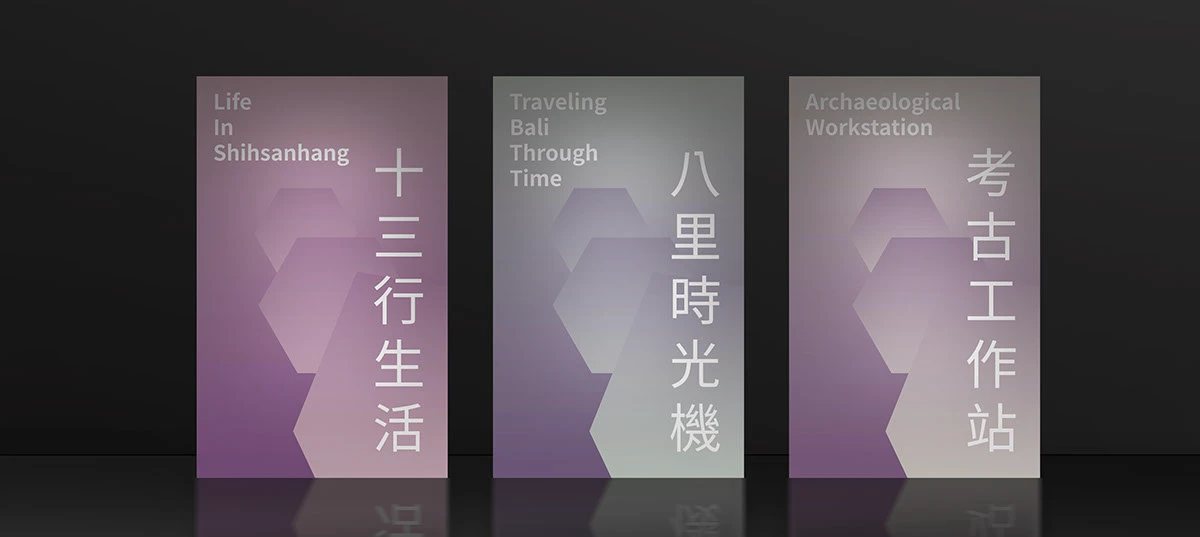
十三行博物館常設展三個展區識別:十三行生活、八里時光機與考古工作站
Fig.01三個展區以一致的字體與幾何語言標示,讓觀眾在不同主題之間辨認參觀路徑。A shared typographic and geometric language connects the three exhibition sections.
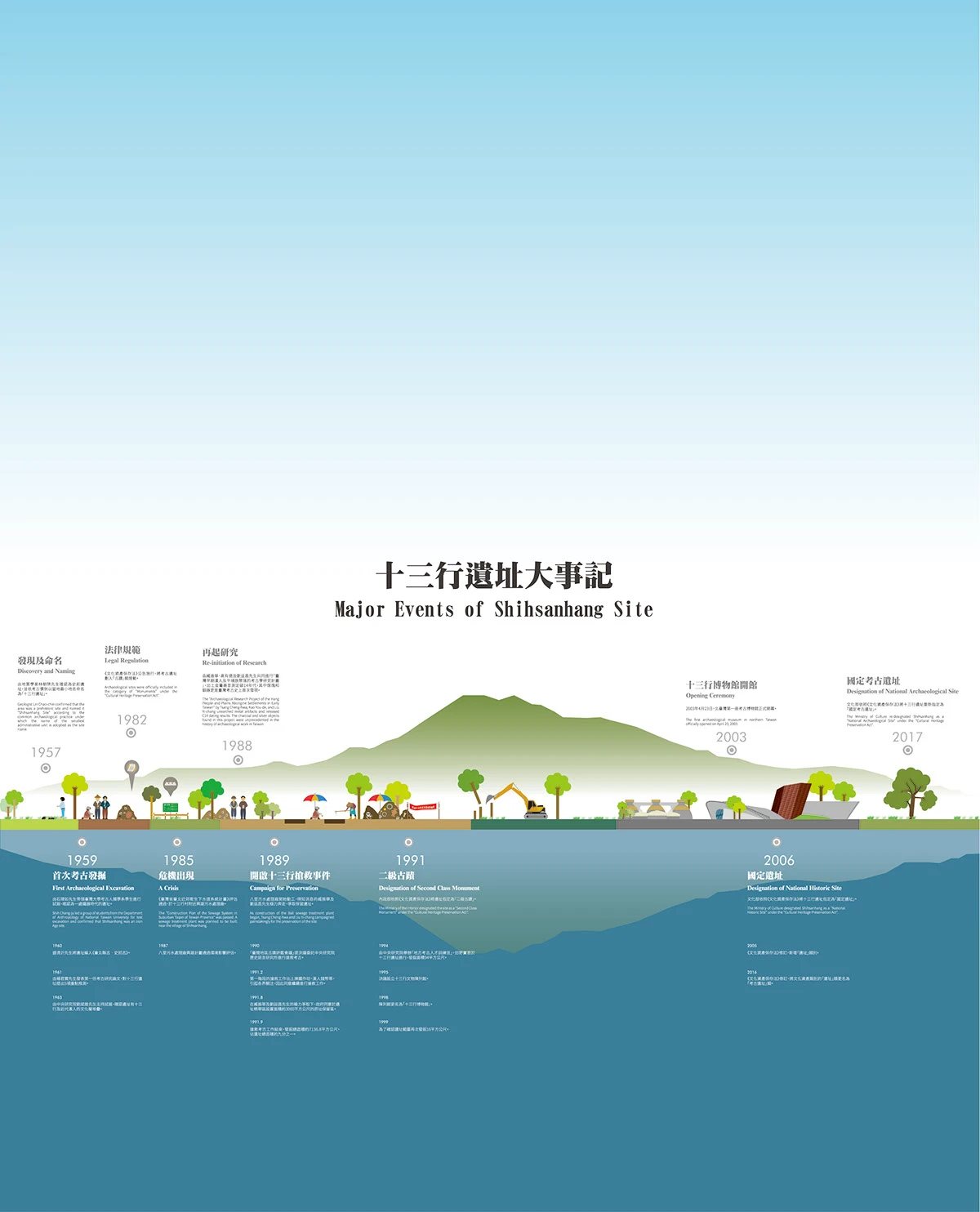
十三行遺址大事記展板,以地景剖面與年表呈現考古歷程
Fig.02遺址大事記把年代放進地表與地下的圖像,讓發現、研究與博物館的成立形成可循的時間線。The timeline places discoveries and research above and below a landscape, making the site history easier to follow.
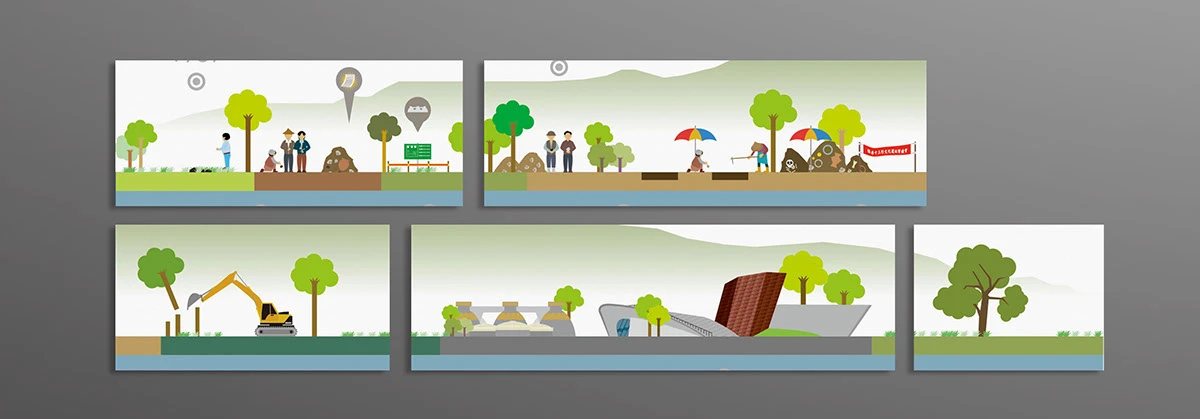
十三行遺址歷史圖解的長幅展板設計
Fig.03長幅圖解沿著地景展開,把不同年代的遺址故事連成一段可步行閱讀的歷程。The long illustration connects different moments in the site history into a walkable story.
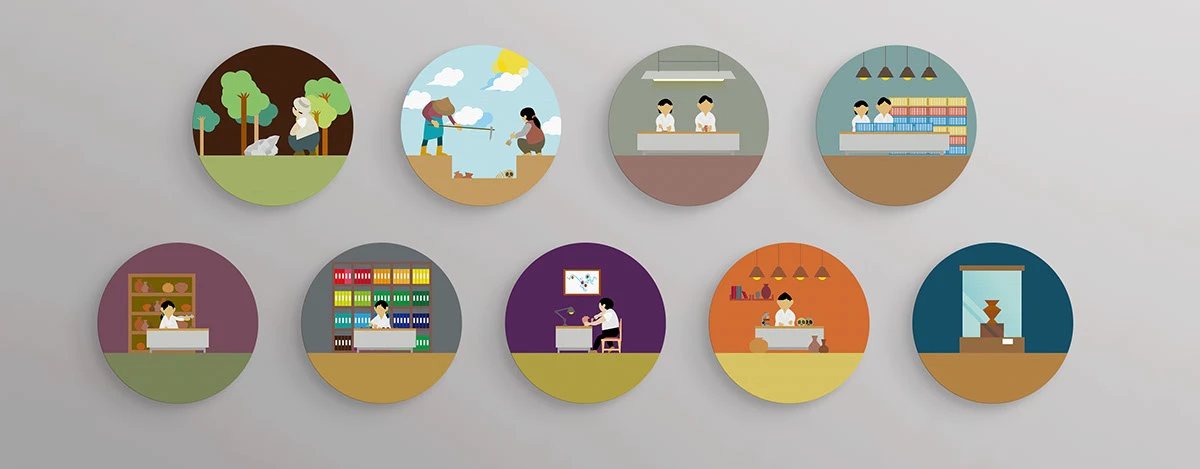
十三行博物館考古與生活主題的圓形圖案系列
Fig.04圓形圖案把考古與生活主題濃縮成容易辨認的小場景,協助觀眾在展板間找到線索。Round illustrations turn archaeology and daily life into recognisable cues across the panels.
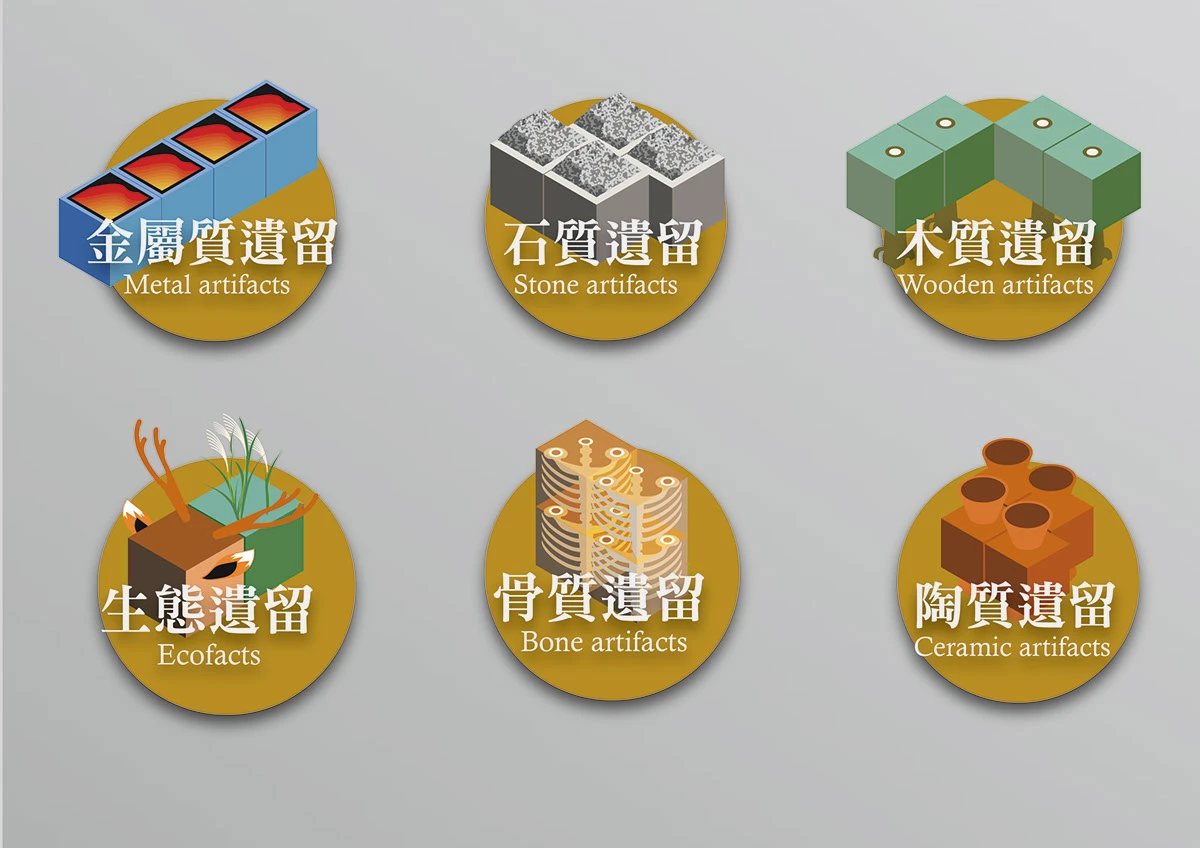
金屬、石、木、生態、骨質與陶質遺留的六種分類圖標
Fig.05六種材料分類各有圖像,讓出土物不再只是名詞,而能先從形狀辨認差異。Six illustrated categories help visitors recognise differences among archaeological materials at a glance.
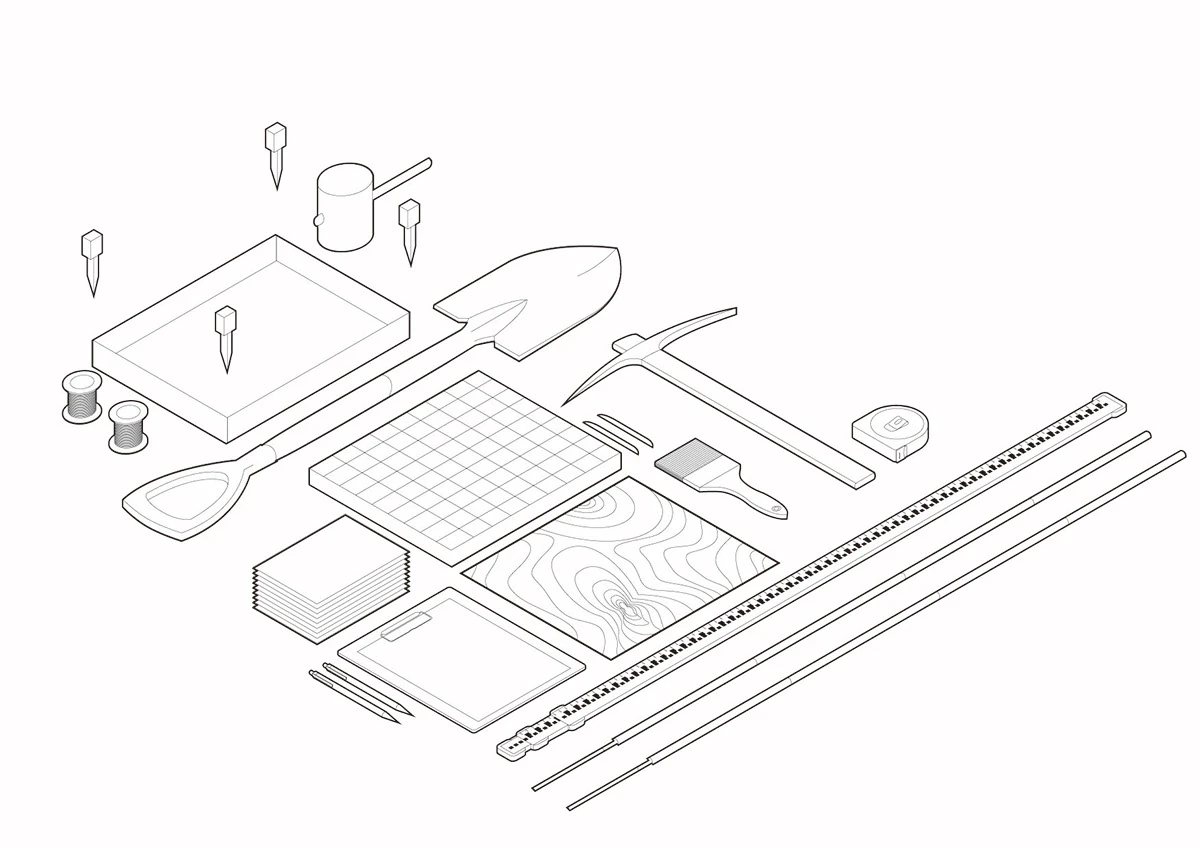
考古工作桌與整理工具的等角線稿圖案
Fig.06桌面與工具的線稿把考古工作帶到眼前,也為資料較密集的展板留下輕盈的視覺層次。Line drawings of the worktable and tools make the research process tangible without crowding the text.
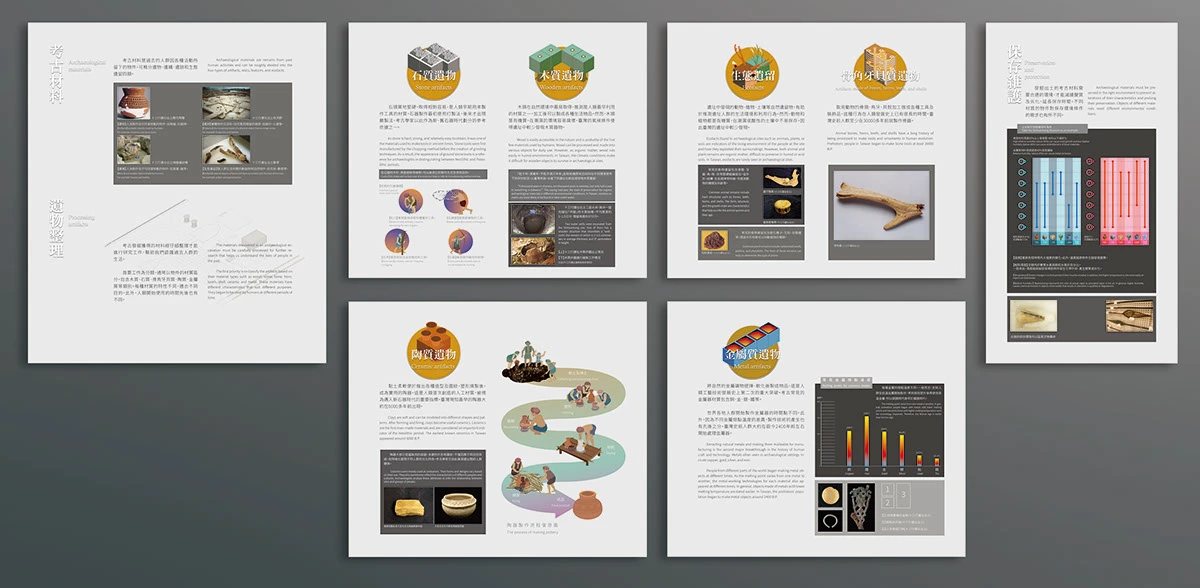
十三行考古工作站雙語展板、圖標與圖文系統的整體配置
Fig.07整體配置把分類圖標、照片與雙語說明放進同一套版面,讓觀眾能逐題深入。Icons, photographs and bilingual text share one layout system across the exhibition.
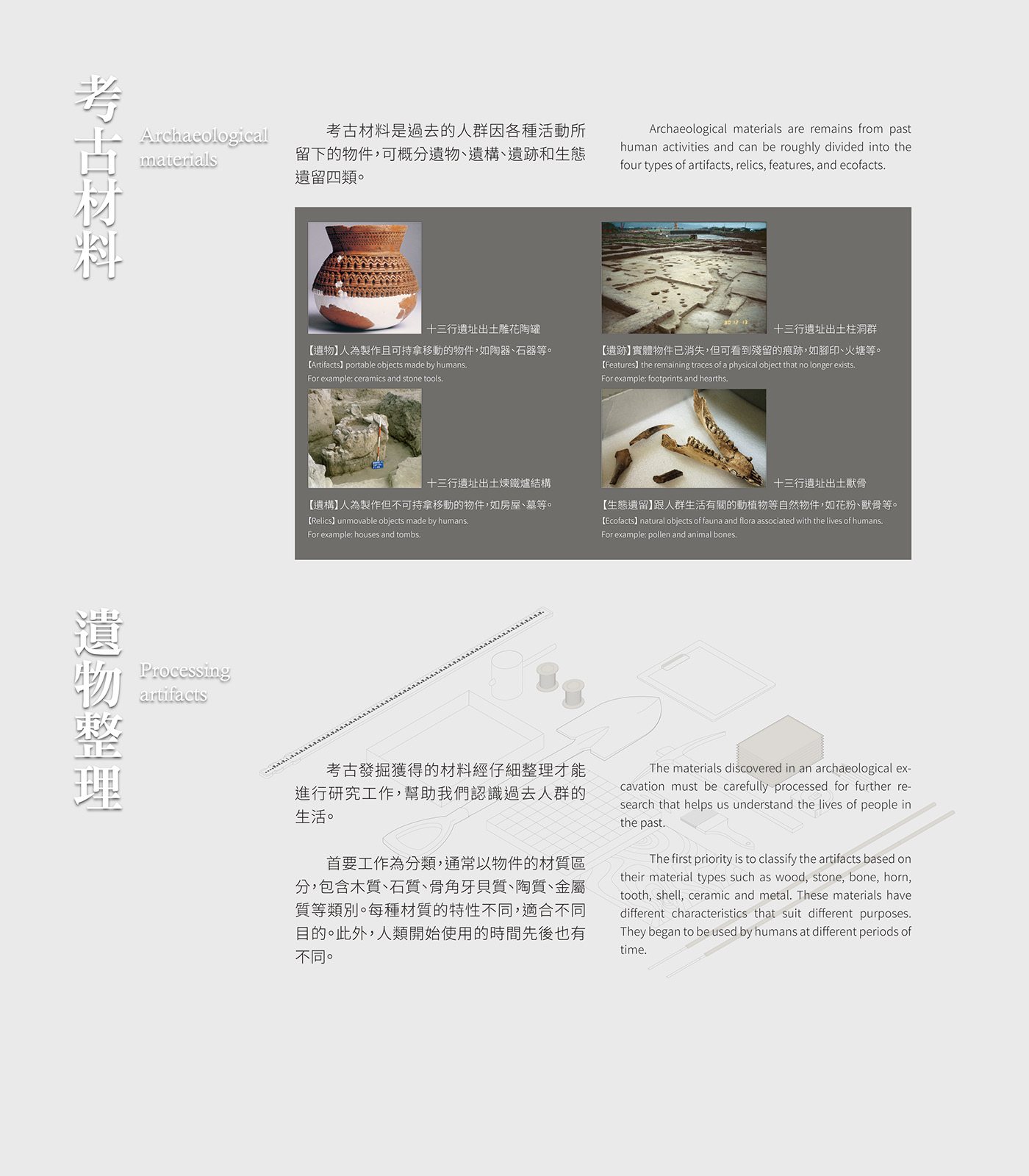
考古材料分類與遺物整理的中英文圖文展板
Fig.08從考古材料到遺物整理,照片、工具線稿與文字共同說明一件出土物如何進入研究。Photographs, tool drawings and text show how a find moves from excavation into research.
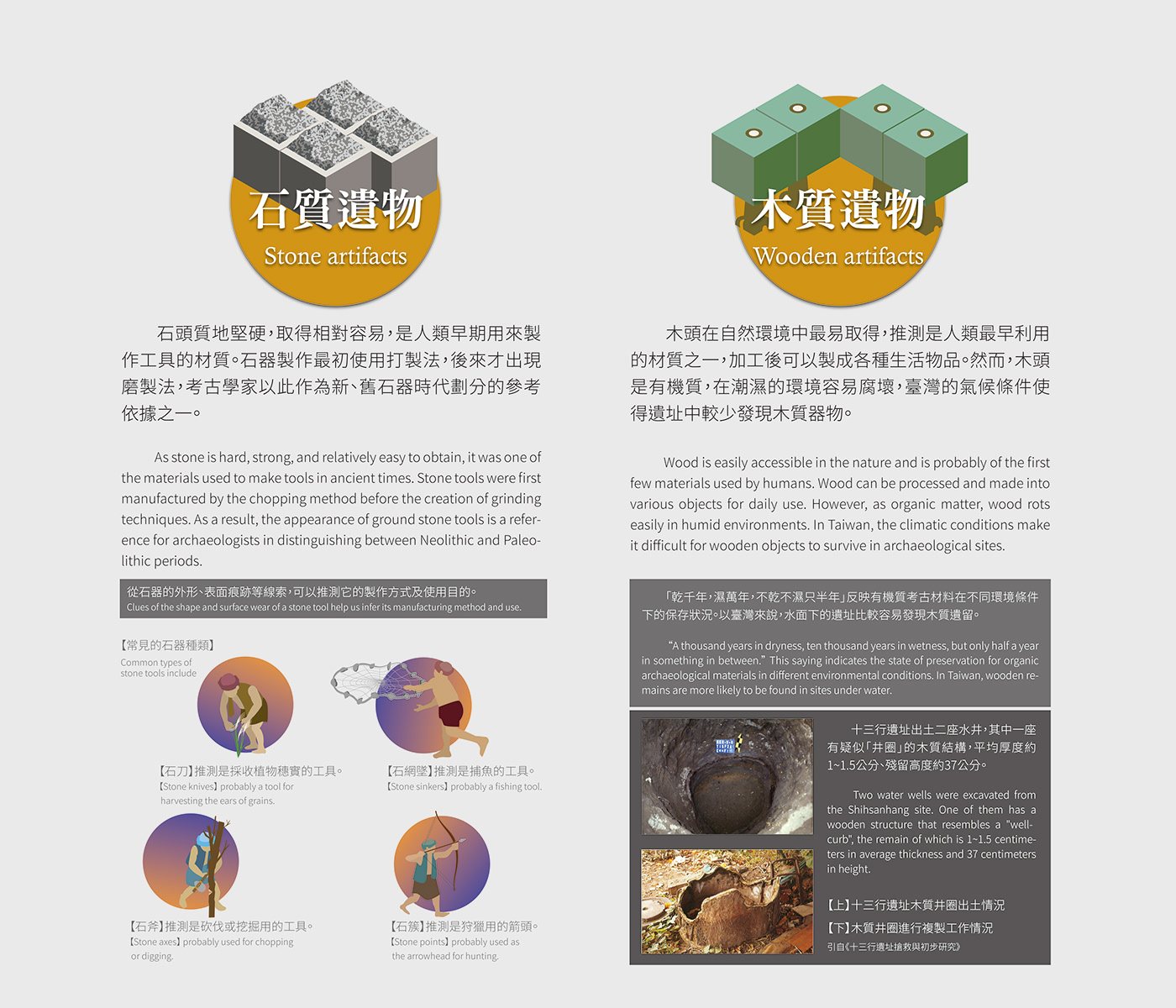
石質遺物與木質遺物的雙語解說展板
Fig.09石與木並列,讓觀眾比較兩種材料的用途,也理解保存條件如何影響今天看見的遺物。Stone and wood panels invite comparison between material use and what survives over time.
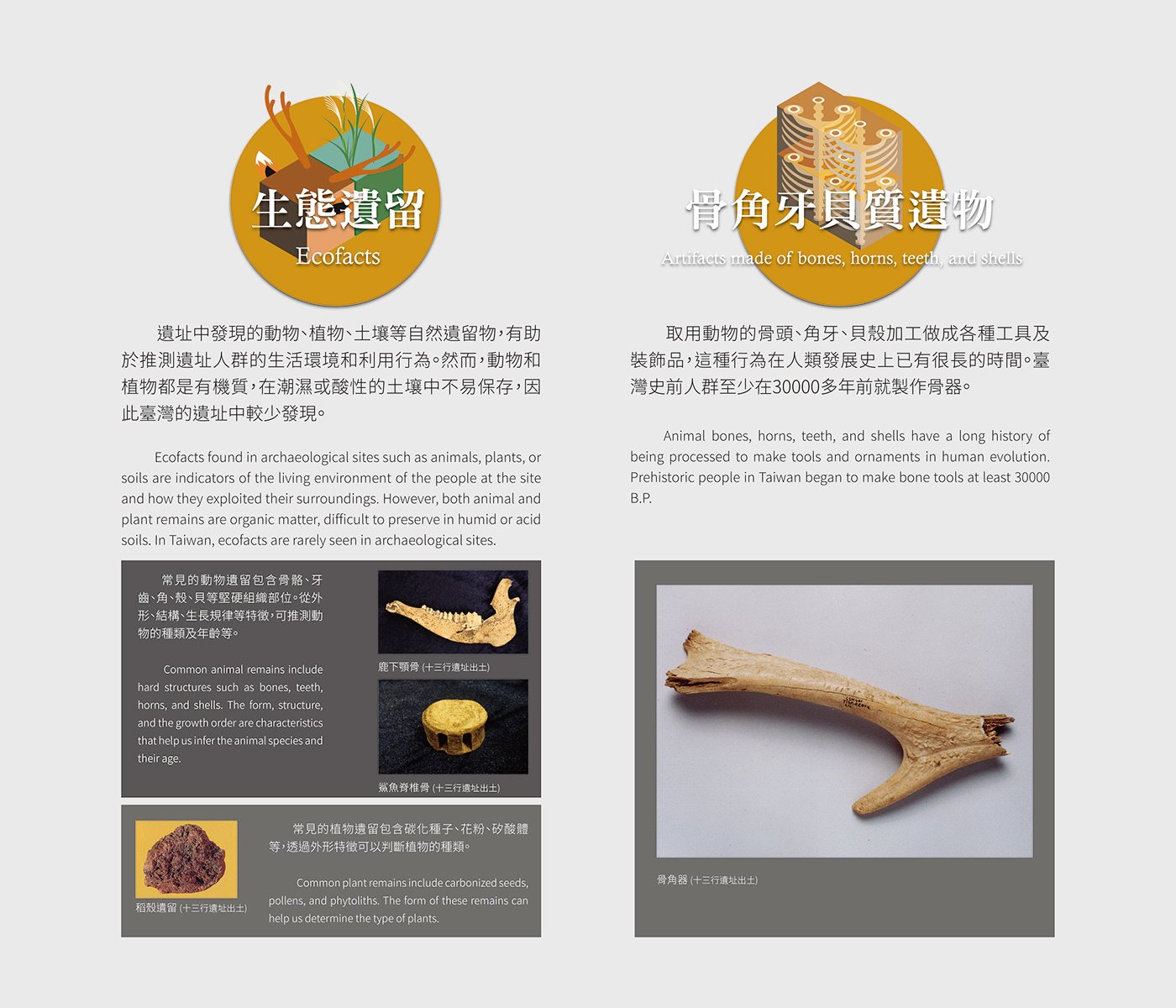
生態遺留與骨角牙貝質遺物的雙語解說展板
Fig.10自然遺留與骨角牙貝材料搭配實物照片,說明考古如何從細小痕跡重建生活。Natural remains and worked animal materials show how small traces reveal past lives.
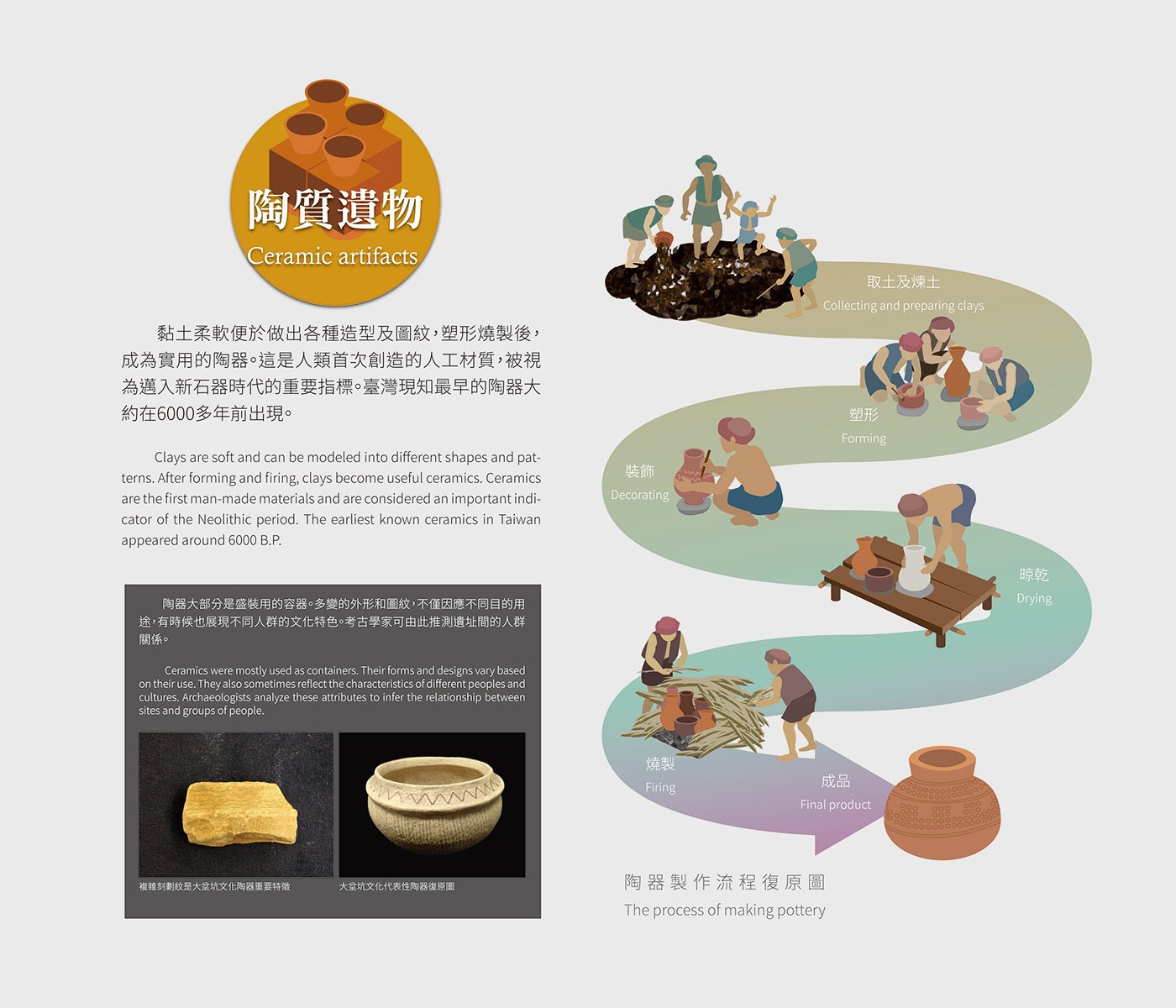
陶質遺物與陶器製作流程的插畫解說展板
Fig.11陶器製作以連續人物插畫從取土走到燒製,讓製作步驟比單靠文字更容易理解。Sequential illustrations follow pottery from clay collection to firing.
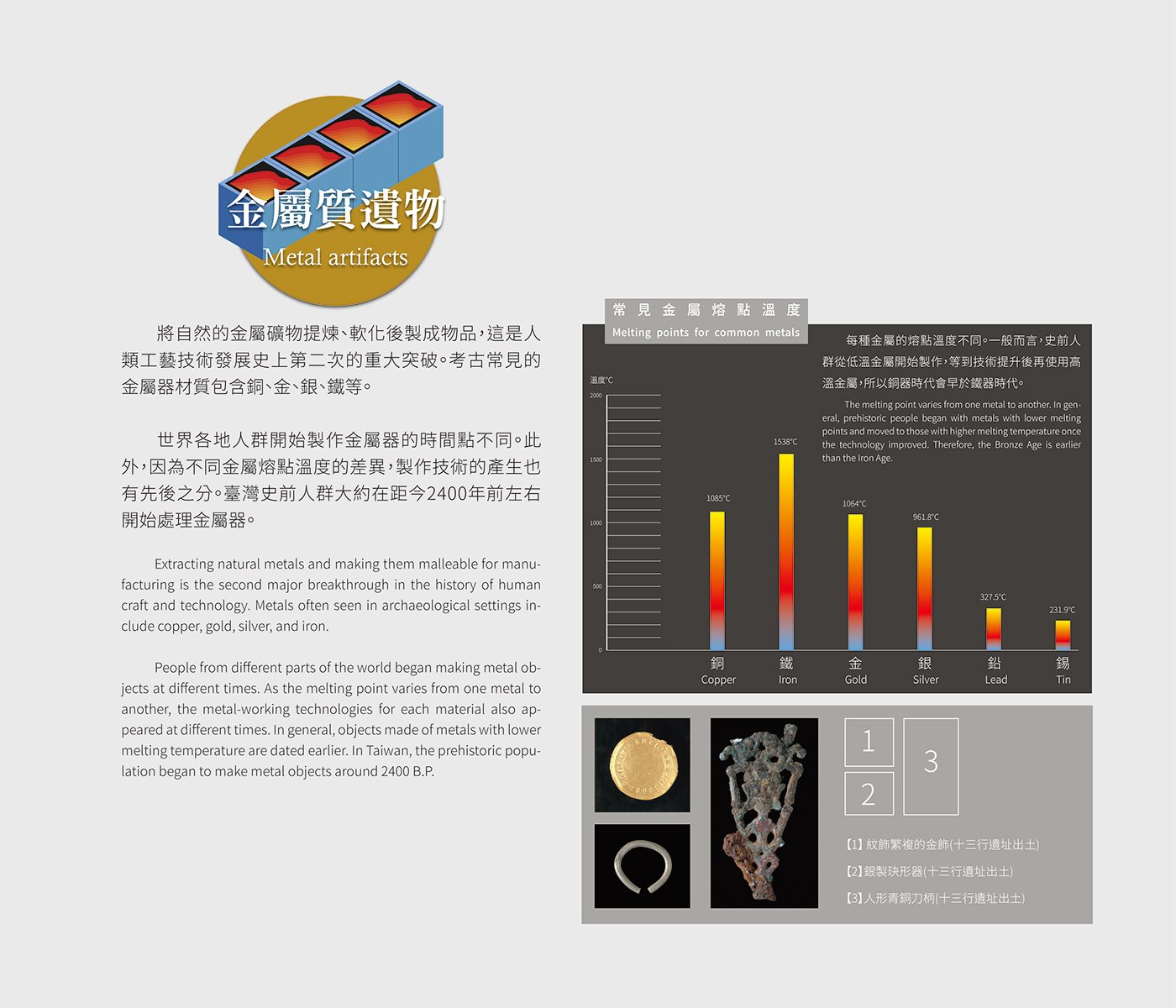
金屬質遺物與金屬熔點比較圖表的雙語展板
Fig.12金屬展板把器物照片與熔點圖表放在一起,連結材料特性與製作技術。Artefact images and a melting-point chart connect metal properties to the techniques used to work them.
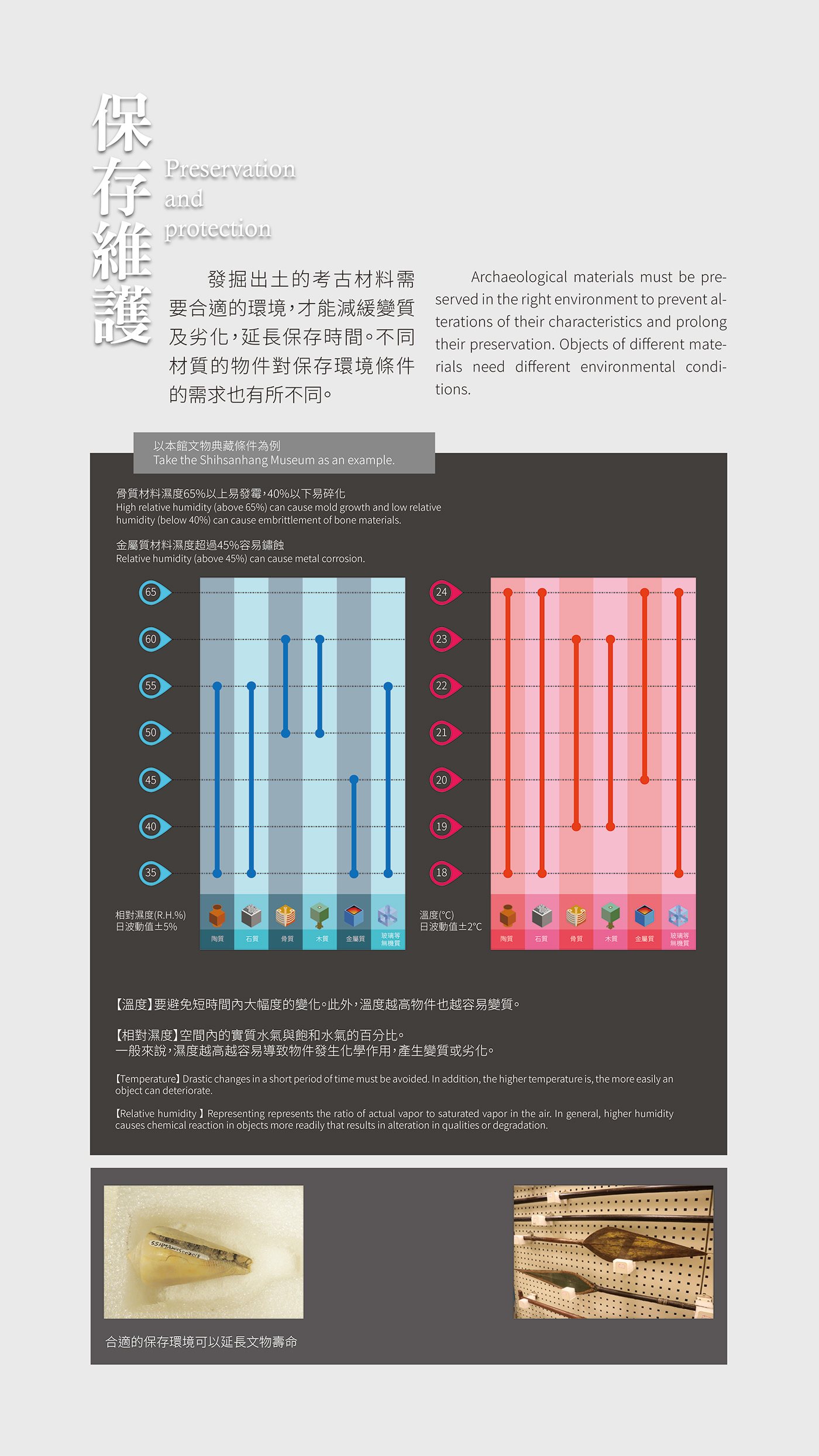
考古材料保存維護與溫濕度條件的資訊圖表展板
Fig.13保存維護以溫度和濕度圖表說明:不同材料需要不同的環境,出土後的照護也是考古工作的一部分。Temperature and humidity diagrams show why caring for objects continues after excavation.
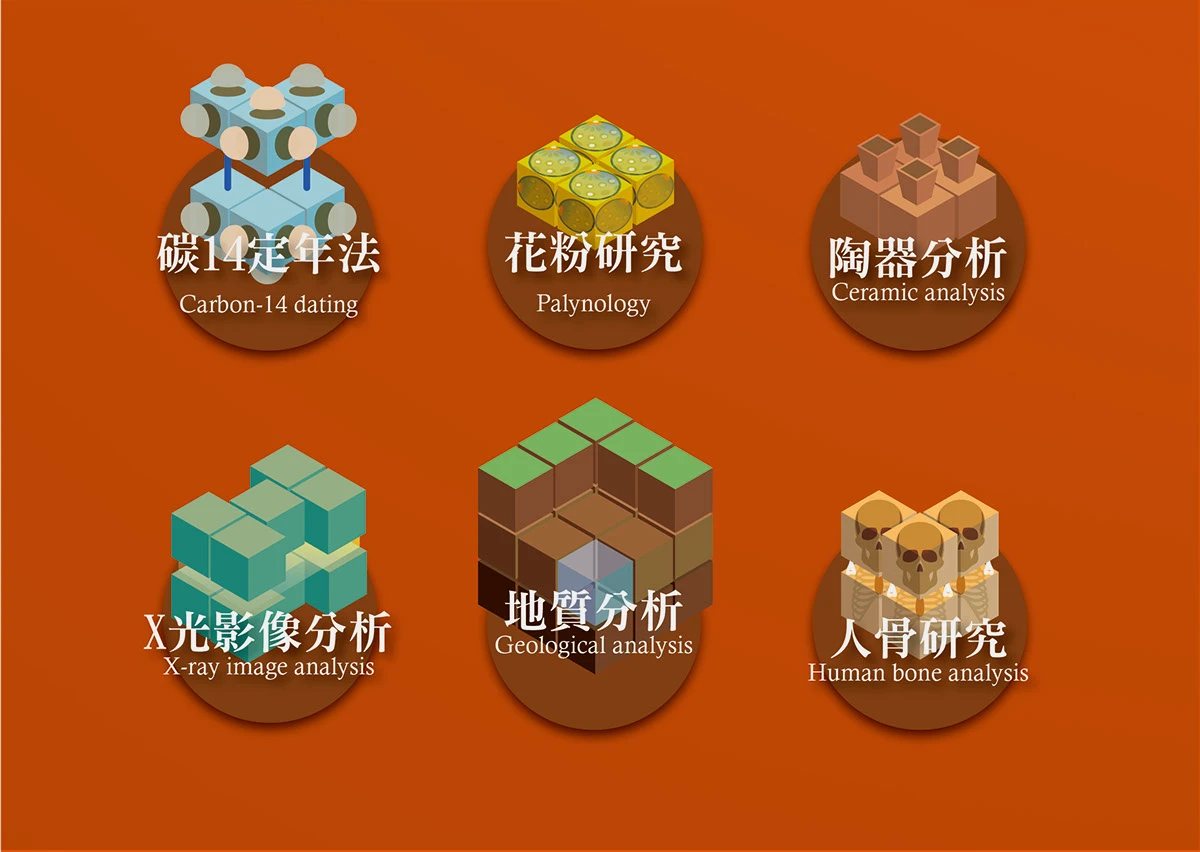
碳十四、花粉、陶器、X 光、地質與人骨研究的六款分析圖標
Fig.14六款分析圖標把不同研究方法化為可辨識的圖像,帶領觀眾從「發現」走向「理解」。Six method icons guide visitors from the discovery of remains to their interpretation.
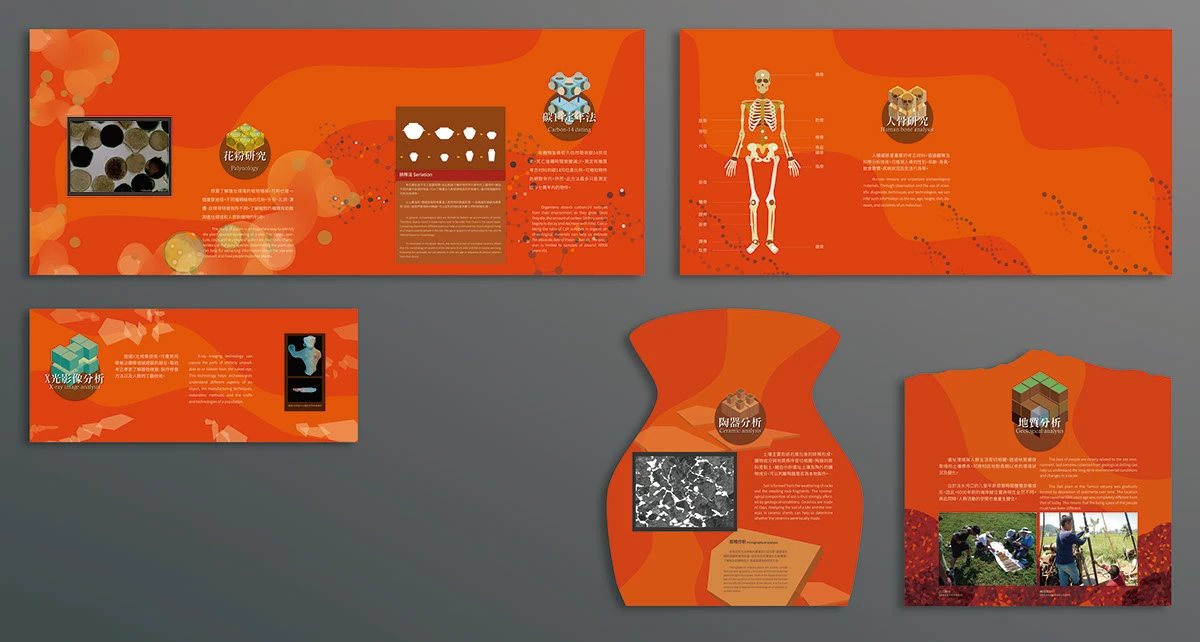
橘色考古分析展板系列的整體配置設計
Fig.15橘色系列把圖標、標本影像與雙語資訊串在一起,讓不同分析方法保有共同的閱讀節奏。The orange panels keep icons, samples and bilingual explanations in a consistent rhythm.
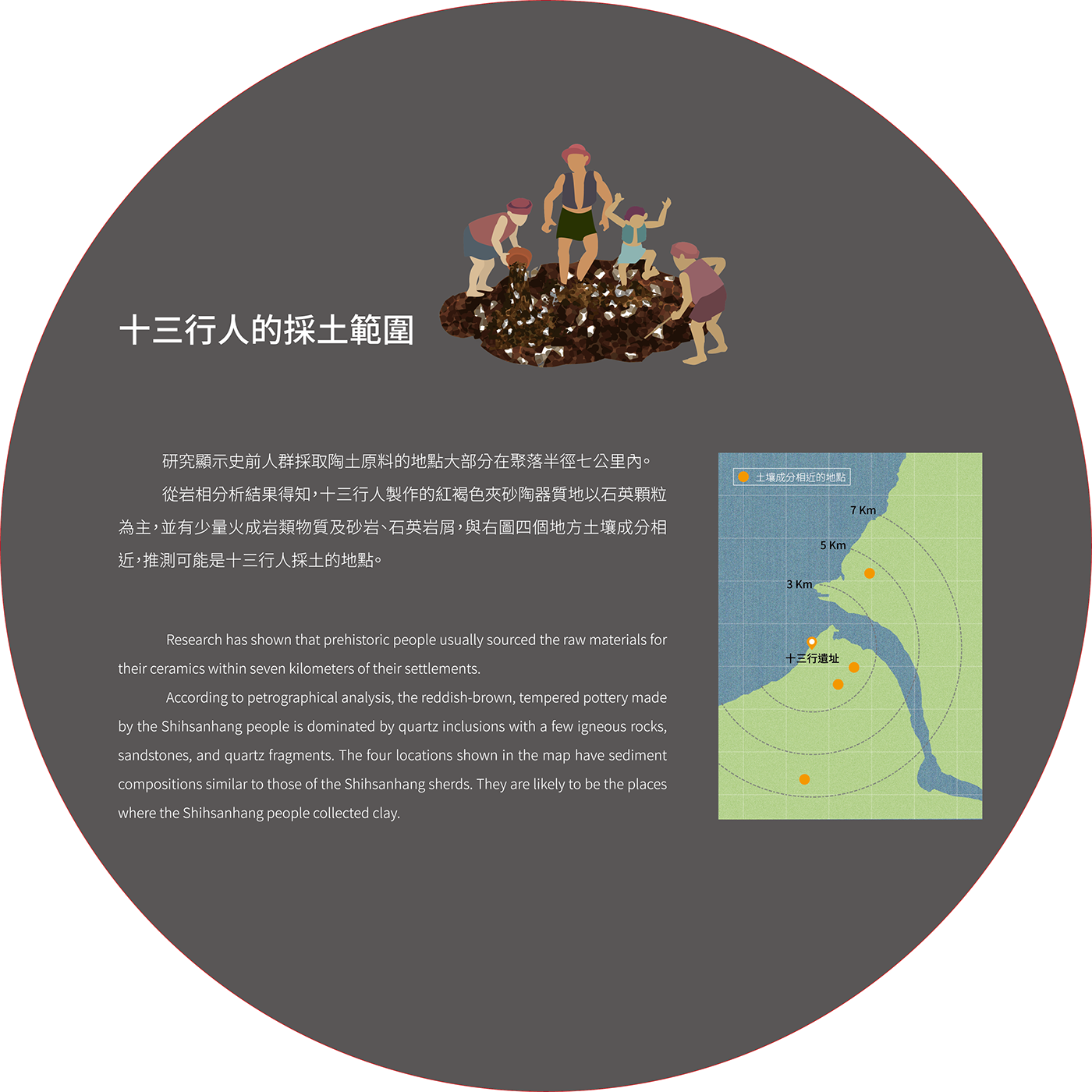
十三行人採土範圍的圓形圖解與地圖
Fig.16圓形圖解把採土示意與地圖放在一起,讓觀眾看見陶器材料與遺址周邊地景的關係。The circular panel pairs clay-gathering imagery with a map of the surrounding landscape.
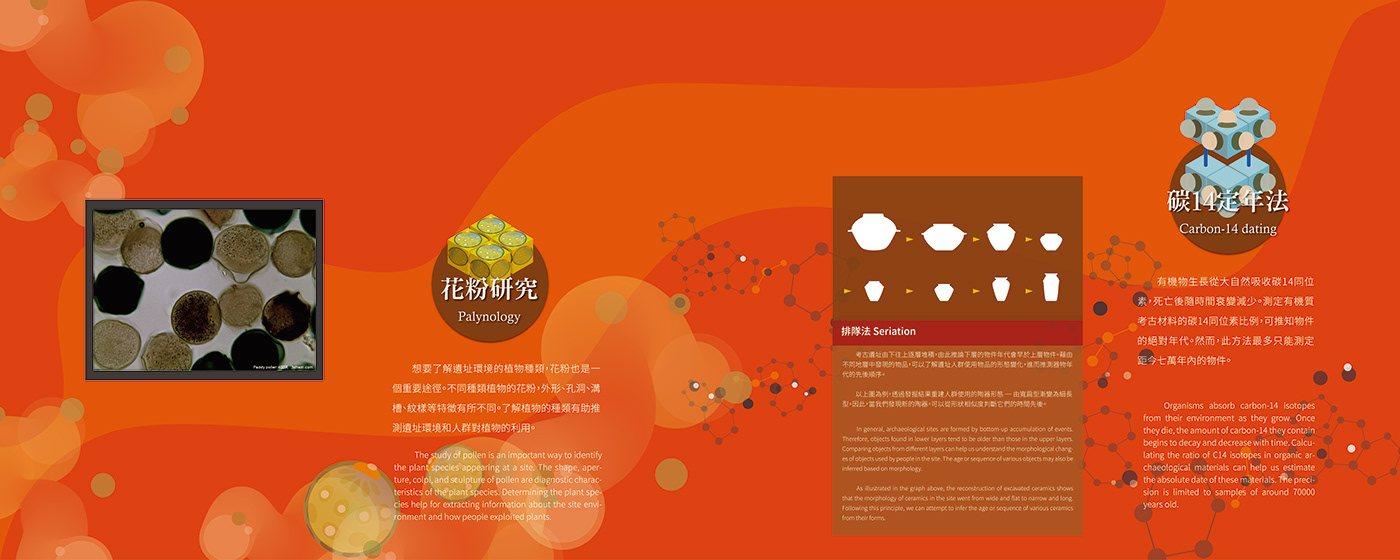
花粉研究與碳十四定年法的橘色橫幅展板
Fig.17兩種研究方法在同一段展板上接續出現,幫助觀眾理解考古證據如何被分析與定年。Paired panels introduce how archaeological evidence can be studied and dated.
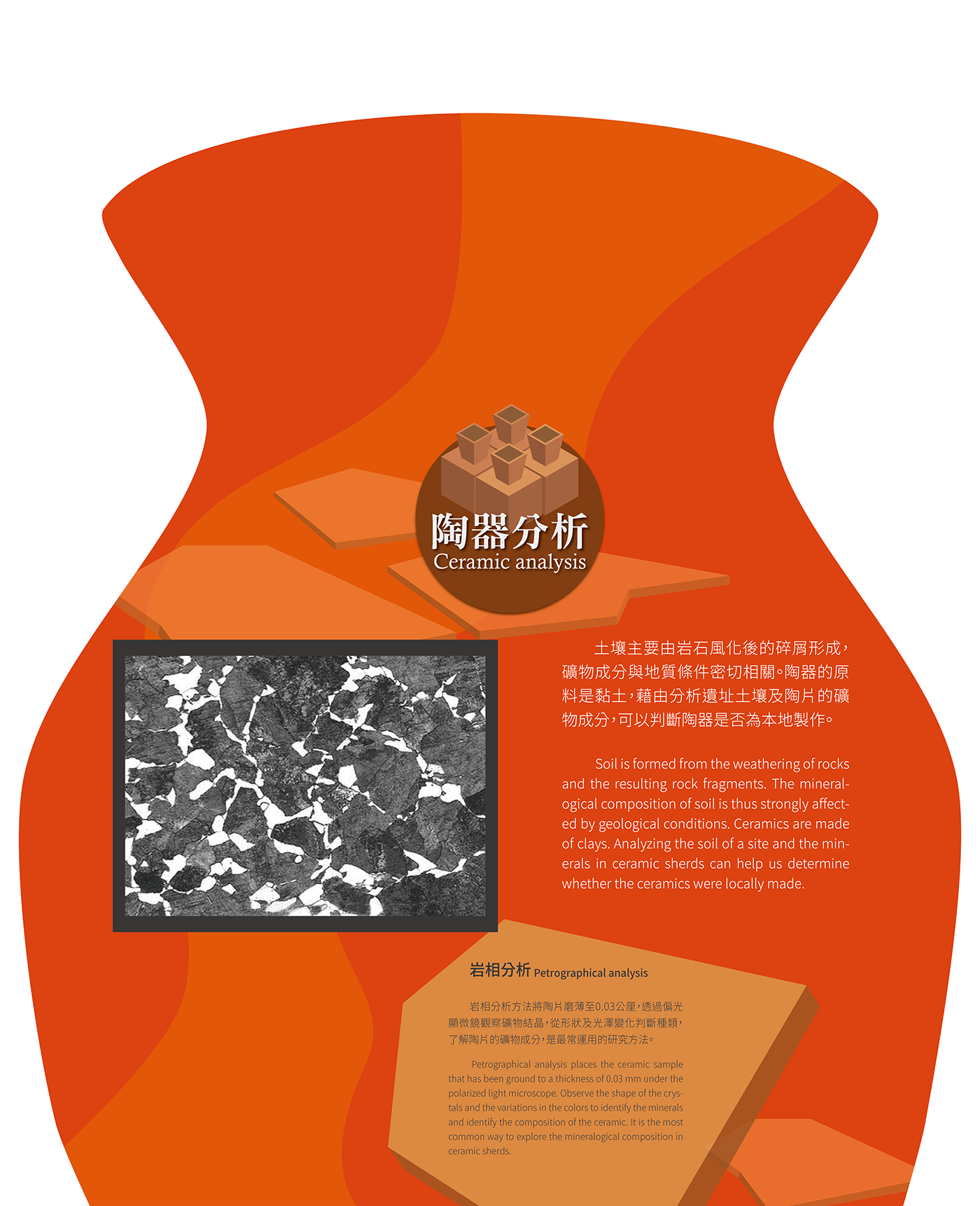
陶器分析的陶罐造形橘色展板
Fig.18陶罐輪廓成為展板外形,讓陶器分析從內容延伸到整個觀看介面。The panel takes the outline of a pottery vessel, carrying its subject into the display form.
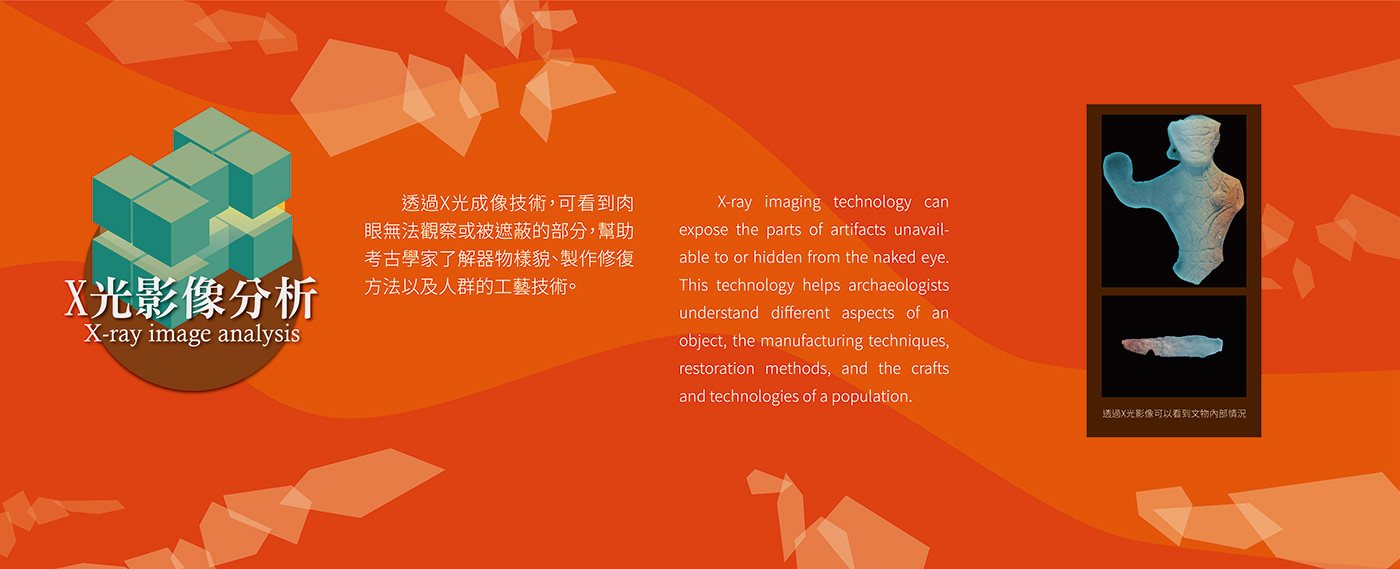
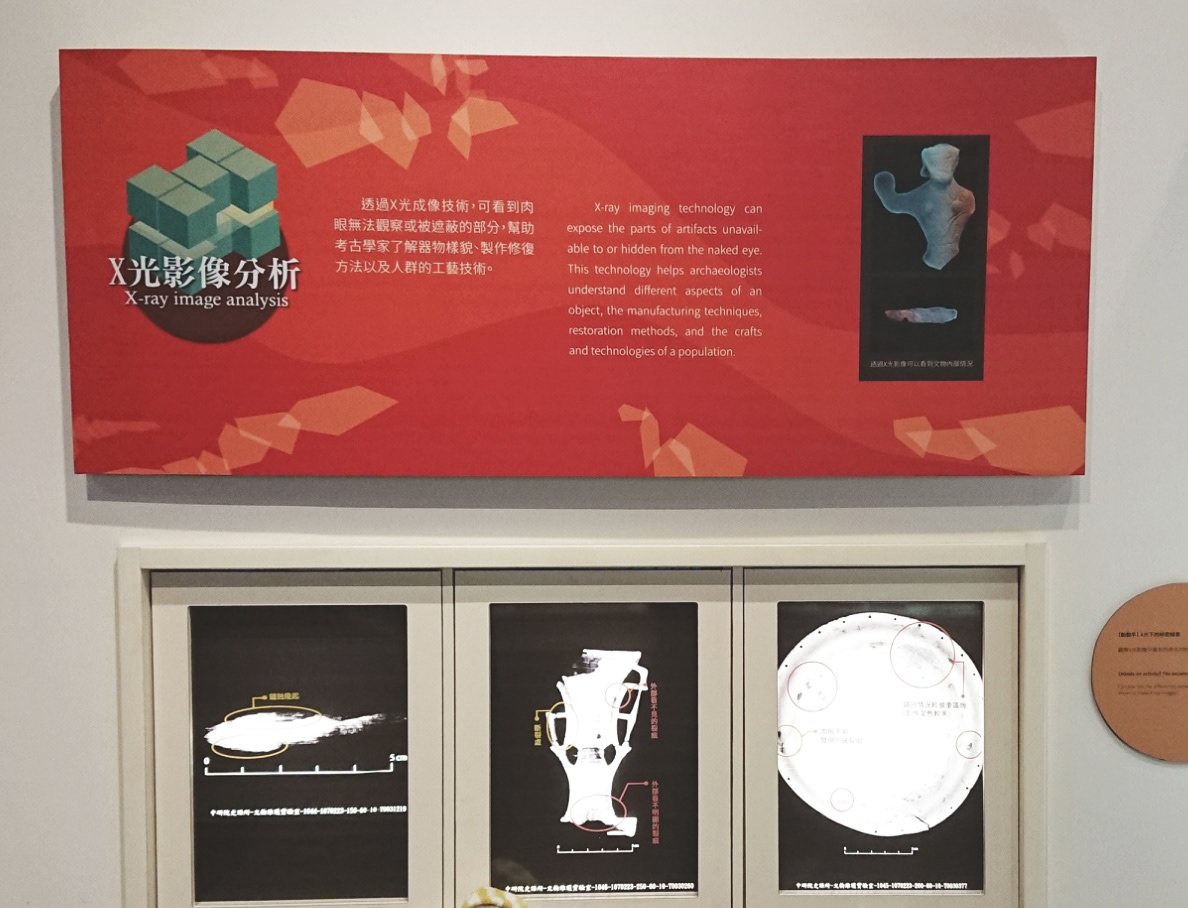
X 光影像分析的橘色橫幅展板
Fig.19X 光影像與文字並列,讓觀眾看到肉眼之外的器物線索。X-ray imagery sits beside the explanation, revealing clues beyond the visible surface.
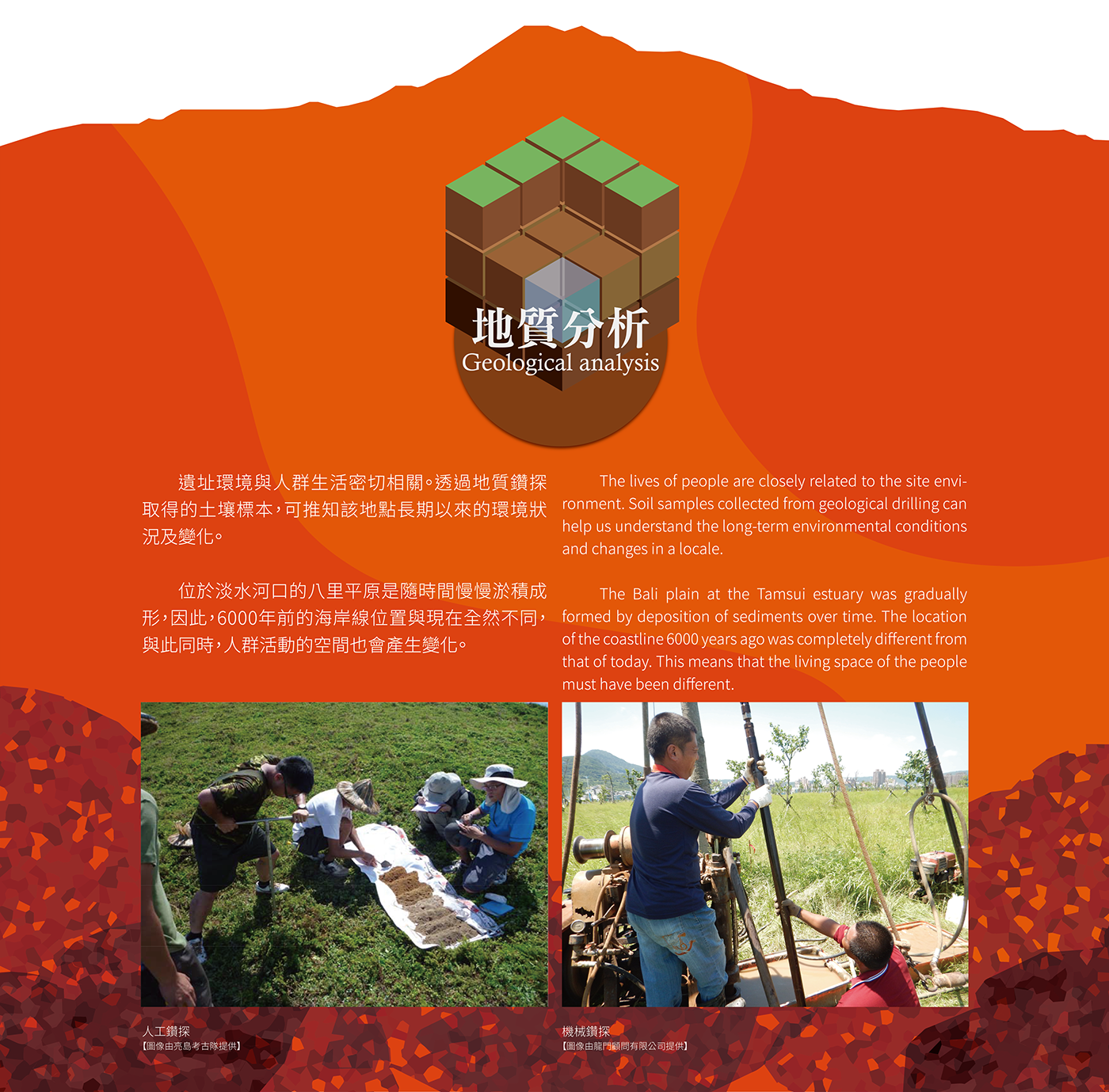
地質分析的橘色山形展板與採樣照片
Fig.20山形邊緣與採樣照片呼應地質主題,將地層研究帶回真實的地景。A landform edge and field photographs tie geological analysis back to the site.
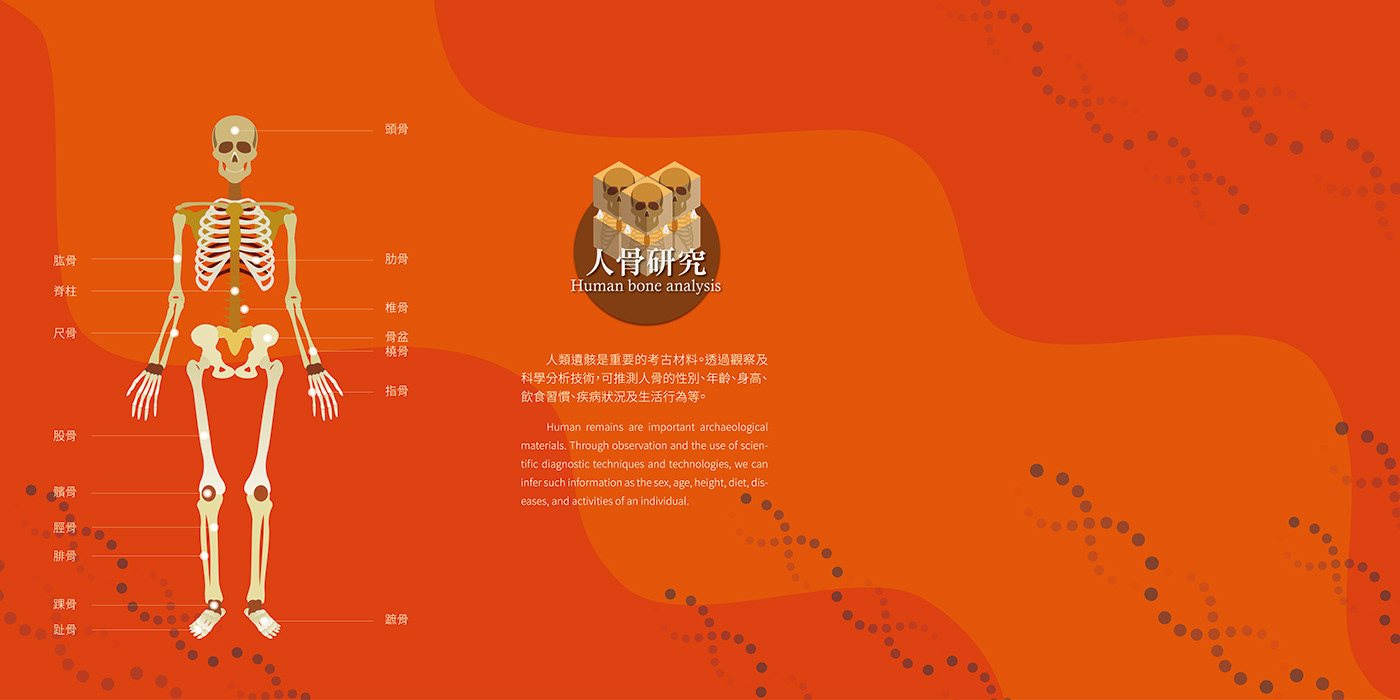
人骨研究的骨骼插畫與橘色展板
Fig.21骨骼圖解以清楚的姿態與標註,讓人骨研究能在展場中被安心地閱讀。A clear skeletal illustration and labels make the research approachable in the exhibition.
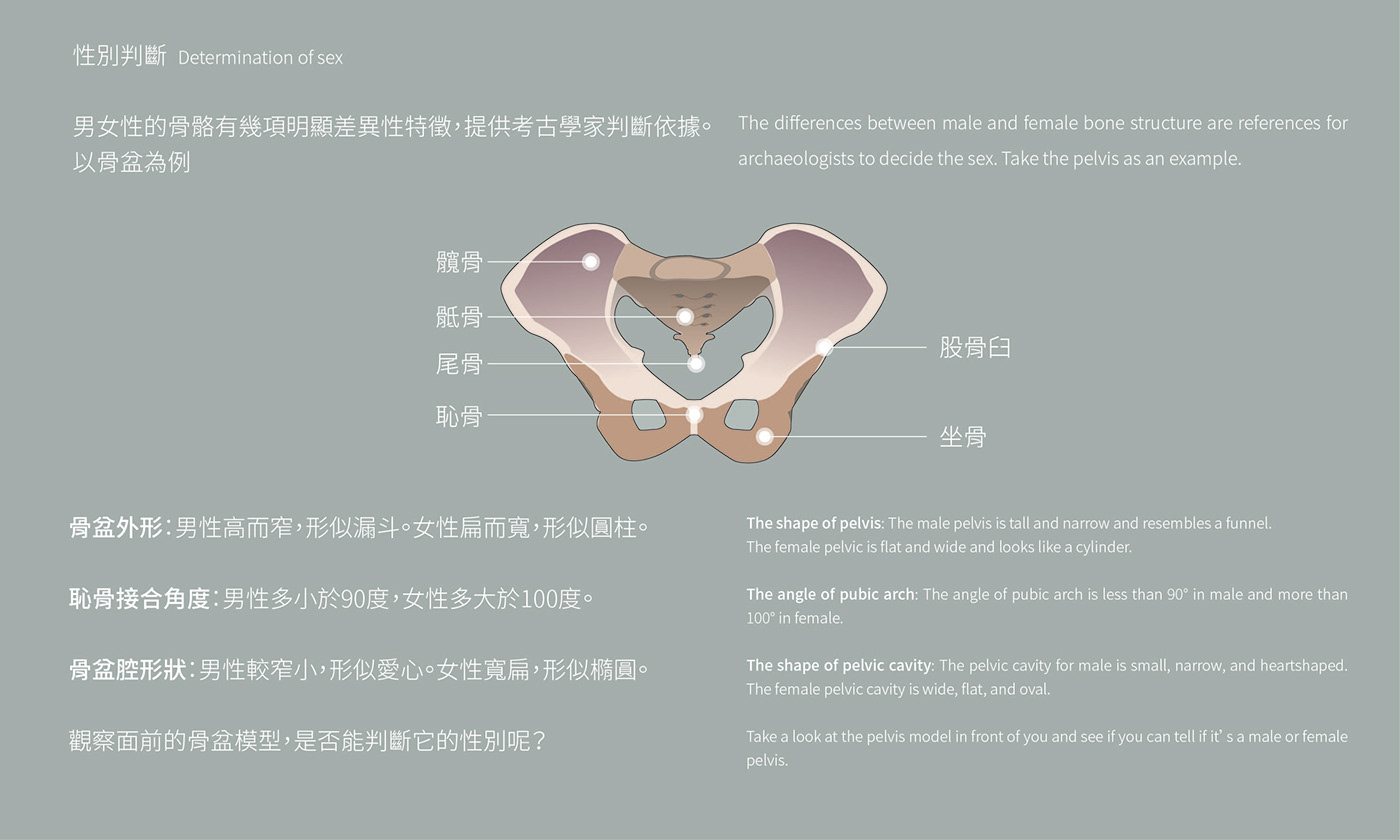
骨盆圖解與人骨研究說明的灰色資訊展板
Fig.22骨盆形態被整理成圖解,示範考古學家如何從骨骼觀察推進研究。A pelvis diagram shows how observations of bones contribute to archaeological research.
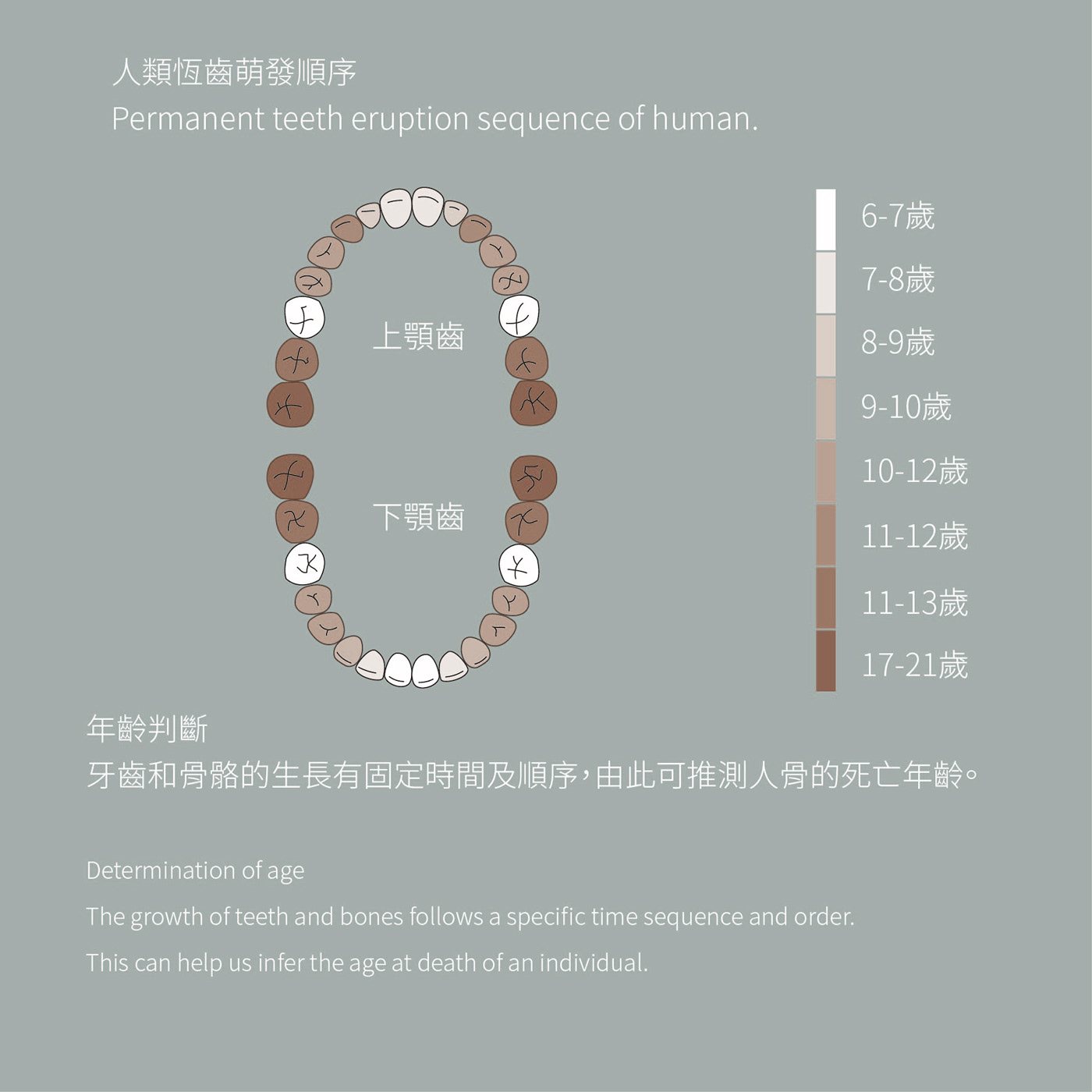
人類恆齒萌發順序與年齡判斷的資訊圖表
Fig.23牙齒依萌發年齡排列,把年齡判斷的依據轉化為直覺可讀的圖。Teeth arranged by eruption age make a research method readable at a glance.
十三行博物館常設展 X 光影像分析展板與器物展示的實景照片
Fig.24展場實景可見 X 光影像分析展板與器物展示相接,讓圖像說明回到真實物件。In the installed exhibition, the X-ray panel sits alongside the displayed objects.
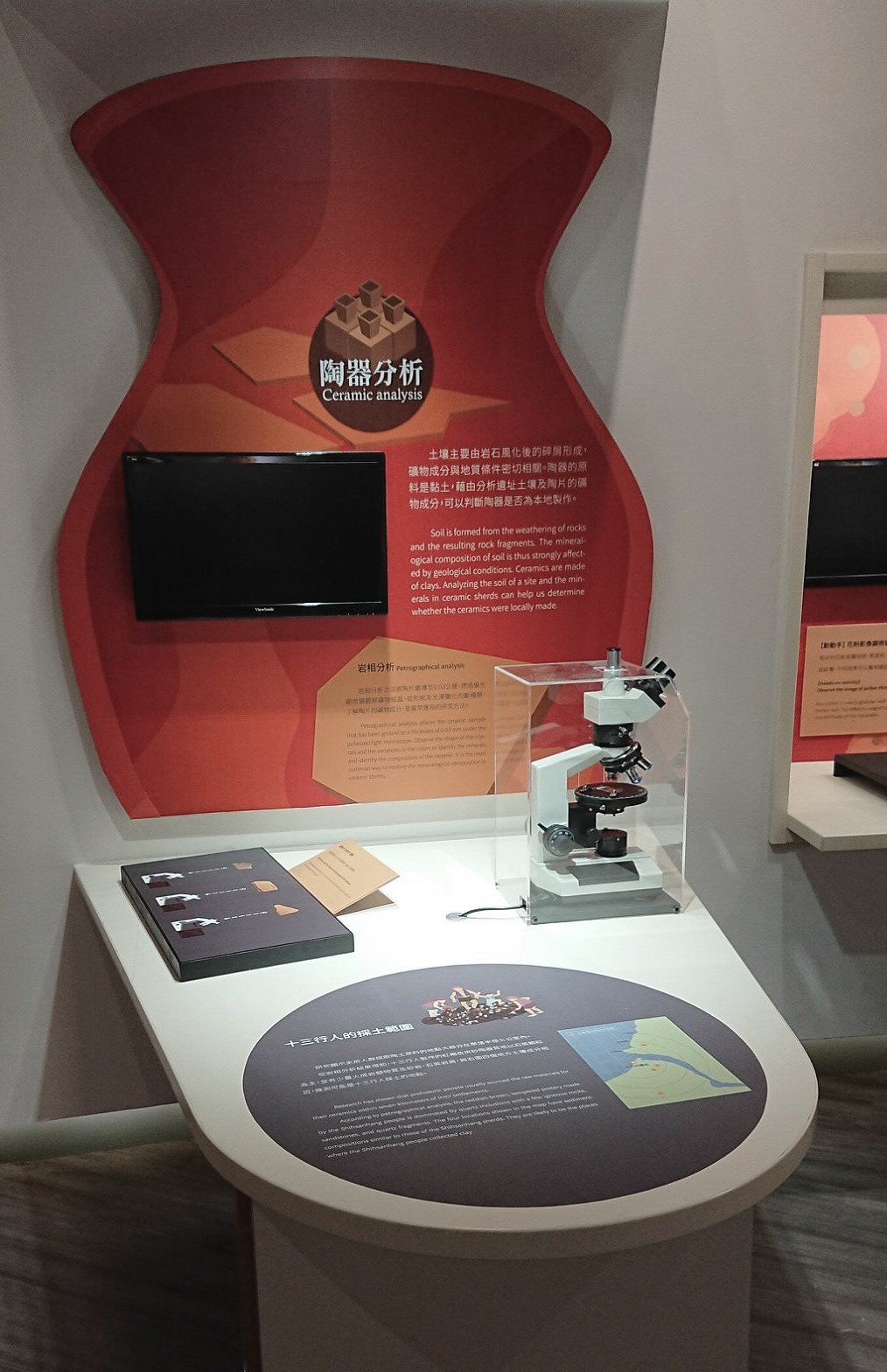
十三行博物館常設展陶器分析站與顯微鏡的實景照片
Fig.25陶罐造形展板與顯微鏡同框,讓抽象的分析方法在展場中有了可觀察的場景。The vessel-shaped panel and microscope bring the analysis process into the visitor’s view.
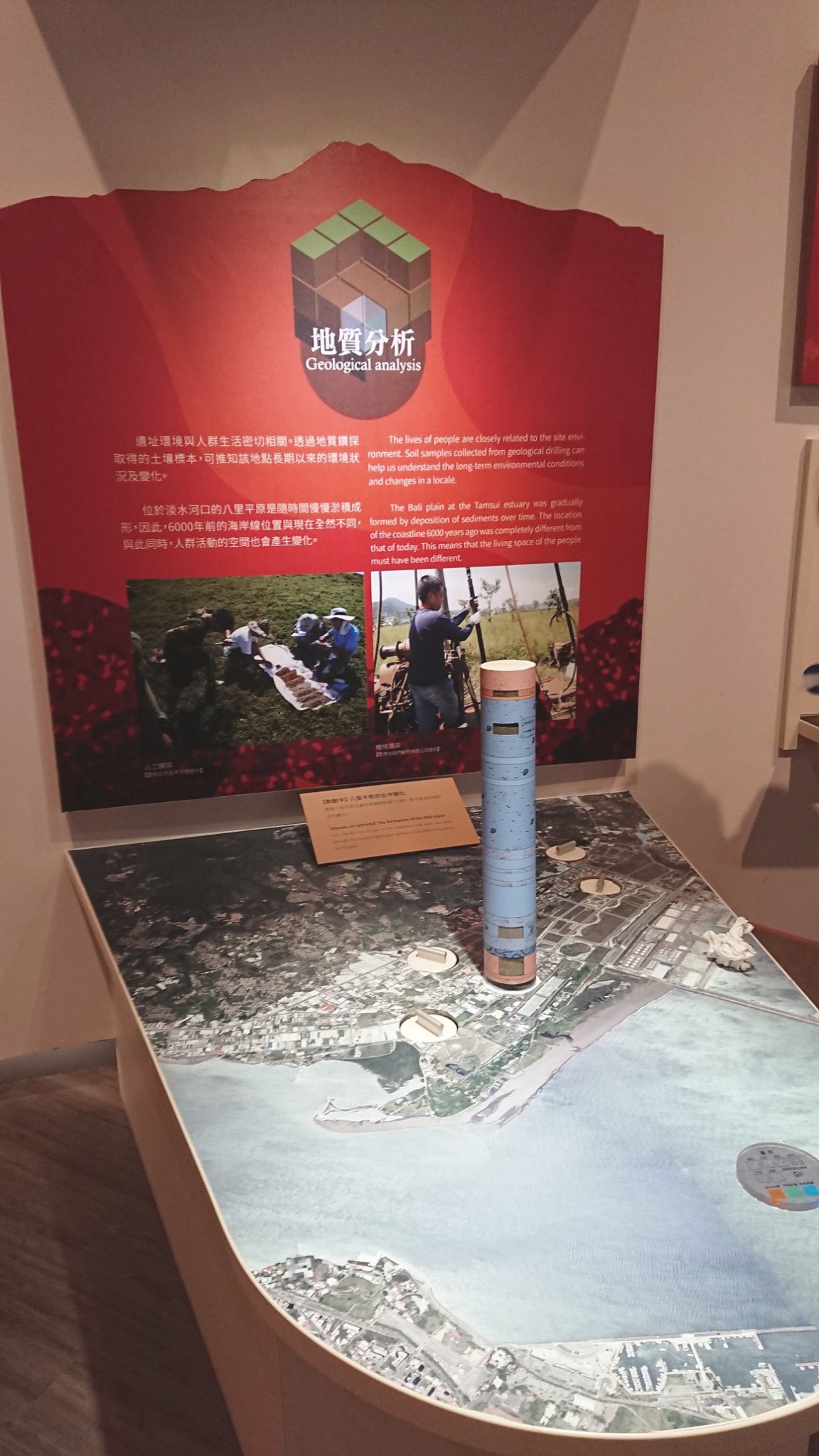
十三行博物館常設展地質分析站與地圖桌面的實景照片
Fig.26地質分析展板連接桌面地圖與採樣展示,讓觀眾把研究方法放回遺址所在的位置。The geology panel meets a tabletop map, placing the method back in the site landscape.